Pallet Quantity Guide
How Many Pallets Do I Need? A Sizing Guide for Loads, Trucks and Projects
By Maynor Martinez, Bro Pallets LLC | Published June 24, 2026
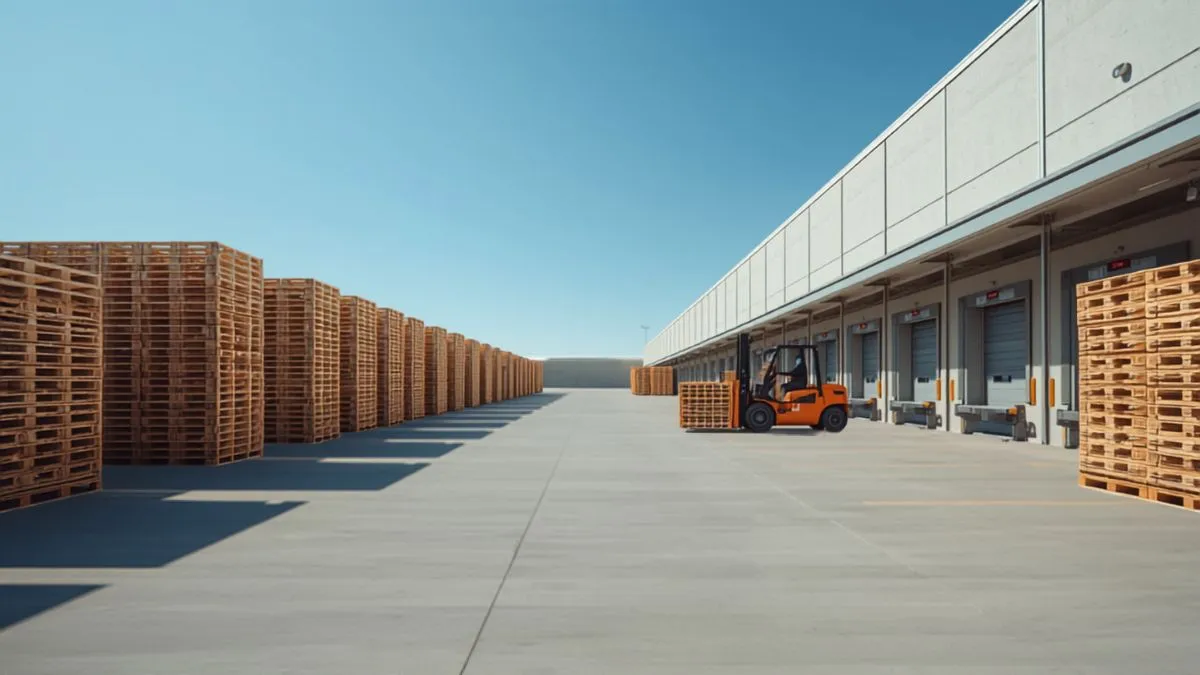
A 53-foot trailer holds about 26 standard 48×40 pallets on the floor, or roughly 52 double-stacked. A 40-foot container takes 20 to 21 on the floor and a 20-foot container 10 to 11. For a DIY or construction project the count depends on usable boards per pallet (five to seven top deck boards on a 48×40) plus a 10 to 15 percent buffer.
| Space | Standard 48×40 pallets (single layer) |
|---|---|
| 53-foot dry van trailer | about 26 (about 52 double-stacked) |
| 40-foot container | 20 to 21 |
| 20-foot container | 10 to 11 |
| DIY or construction project | linear feet needed ÷ usable feet per pallet, plus 10 to 15 percent |
The question sounds simple until you try to answer it with a number. Order too few pallets and a truck sits half-loaded or a build stalls halfway through; order too many and you are paying to store and eventually dispose of stock you never used. The right count depends on what you are actually doing with the pallets, and that is where most rough guesses go wrong before a single pallet is ordered.
Working out a real figure means separating freight math from project math, because the two follow completely different logic. A truckload is a packing problem with known dimensions; a DIY or construction job is a materials estimate with waste built in. Below is how to count for each scenario, with the standard footprints and trailer figures that the numbers actually hang on.
Why "How Many Pallets Do I Need" Is Really Two Questions
When someone asks how many pallets they need, they are usually asking one of two very different things, and the answer changes entirely depending on which. The first is a shipping question: how many platforms does it take to move a given load on a truck or into a container. The second is a materials question: how many pallets do I need to buy as raw wood or as a surface for a project that has nothing to do with freight.
The shipping version is governed by footprint and trailer geometry, so the count is fairly precise once you know the pallet size. The project version is governed by how much usable lumber or surface area you can pull from each pallet, which varies with the size and condition of the stock. Mixing the two methods is where people end up short. Treat them separately and each one becomes straightforward.
Counting Pallets for a Shipment or Truckload

For freight, the count starts with the trailer, not the cargo. A standard dry van and a shipping container both have fixed interior dimensions, and the pallet footprint you choose decides how many fit on the floor. Get the footprint and the stacking plan right and the rest is arithmetic.
Pallets Across a 53-Foot Trailer Floor
The most common over-the-road trailer in the United States is 53 feet long and roughly 100 inches wide inside. A standard 48×40 GMA pallet placed with its 40-inch side facing forward fits two across the width, and the 48-inch depth lets thirteen rows run down the length. That works out to about 26 standard pallets in a single layer on the floor. This is the figure most freight quotes are built around, which is why the 48×40 footprint is the default for full-truckload planning.
Single-Stack vs Double-Stack Math
Twenty-six pallets is the single-layer number. If the freight is stackable, meaning the product on the bottom pallet can carry the weight of a second pallet without crushing, you can double-stack and roughly double the count to about 52 pallets per trailer. Whether you can stack depends on the product, not the pallet, so confirm crush resistance before you plan around the higher number. Dense, boxed goods usually stack; fragile or odd-shaped loads usually do not, and those ship single-layer at the lower count.
Footprint Matters: 48x40 vs 42x42 vs 36x36
Change the footprint and every figure above moves. The 48×40 GMA size accounts for around 30 percent of all new wood pallets produced because it packs trailers efficiently, but it is not the only option. A 42×42 square pallet, common in the paint, drum, and telecom trades, packs differently and shifts your floor count. A compact 36×36 pallet, popular for electronics and beverages, fits more units across a smaller truck but carries less per platform. If you are unsure which footprint your load calls for, the pallet dimensions and size chart lays out each one, and the guide on how to choose pallet size walks through matching footprint to cargo before you settle on a count.
Counting Pallets for a Container or Export Load
Sea containers follow the same logic as trailers but with tighter interiors, and export adds a compliance layer that affects which pallets you can use, not just how many. If the freight is leaving the country, the quantity question and the treatment question have to be answered together.
20-Foot vs 40-Foot Container Floor Counts
A standard 40-foot container holds roughly 20 to 21 standard 48×40 GMA pallets on the floor, depending on the loading pattern and whether you orient pallets straight or in a pinwheel arrangement to use the corners. A 20-foot container, being half the length, holds around 10 to 11 on the floor. As with trailers, double-stacking is possible when the product allows it, which can roughly double those figures. Because container interiors are less forgiving than trailers, planning the loading pattern in advance is what separates a clean 21-pallet floor from an awkward 18.
Heat-Treated Quantity for ISPM-15 Exports
Every wood pallet in an export load bound for one of the 180-plus countries that enforce ISPM-15 must be heat treated and stamped with the IPPC mark, so your container quantity is also your heat-treated quantity. There is no partial exemption: if 20 pallets are going into a container headed overseas, all 20 need to be compliant, because a single untreated platform can hold the whole shipment at the destination port. Count the export pallets the same way you count freight, then make sure the entire number is specified as heat treated when you order. The detail on stamps and compliance is in the ISPM-15 heat treated pallets guide.
Counting Pallets for a DIY or Construction Project
Project counting throws out the trailer math entirely. Here a pallet is a source of lumber or a structural surface, and the question becomes how much usable wood each one yields and how many you need to cover the build. This is also where free or salvaged pallets tempt people into underestimating, because not every board comes off clean.
Estimating Boards Per Pallet for a Build
A standard 48×40 pallet carries roughly five to seven top deck boards plus the bottom boards and stringers, but only a portion of those come off intact and reusable, especially on weathered stock. For a furniture or decking project, start by calculating the total linear feet of board you need, divide by the usable feet you can realistically pull from one pallet, and you have a raw pallet count. Because boards split at the nail holes and warp with age, the usable yield from a salvaged pallet is often lower than the board count suggests. If the build will hold food, plants, or skin contact, the wood source matters too, which the guide on whether wood pallets are safe for furniture covers.
Why Project Counts Run Higher Than You Expect
The single most common mistake in project planning is counting pallets as if every board is usable. They are not. Cutting waste, split ends, nail damage, and mismatched thicknesses all eat into the yield, and on reclaimed wood the loss is steeper. A practical rule is to add 10 to 15 percent over your raw calculation to absorb breakage, mismatch, and cutting waste, and to push toward the higher end when the wood is salvaged rather than purchased. Running short mid-project and trying to match a second batch of mismatched pallets is exactly the headache the buffer is meant to prevent.
Why Uniform Purchased Pallets Beat a Pile of Mismatched Free Ones
Free pallets are appealing right up until you sort them. A pile of mixed sizes and grades means inconsistent board thickness, varying footprints, unpredictable wood quality, and a sorting job that costs labor before any work begins. For a shipment, mismatched footprints will not pack a trailer or container to the clean counts above, so you lose the efficiency the whole calculation depends on. For a build, mismatched lumber means more cutting, more waste, and a higher real count to finish the job.
Buying a uniform run of one size and grade removes that variability. The footprint is consistent, so the trailer and container math holds; the board yield is consistent, so the project count holds; and the wood is graded and inspected before it leaves the yard, so you are not paying to sort someone else's surplus. The catalog of pallet types and sizes we stock shows the standard footprints, and our 48×40 GMA block pallets are the default for both freight and most builds because of how predictably they pack and yield.
How to Order the Exact Quantity (and Not Over-Buy)
Once you know whether you are solving a freight problem or a project problem, ordering the right count is a short conversation rather than a guess. For a shipment, work backward from the trailer or container floor count, decide whether the freight stacks, and order to that number. For a project, calculate your raw board or surface requirement, add the 10 to 15 percent buffer, and round to a clean order quantity. As a local supplier in Los Angeles, we stock standard sizes in volume, which means you are not forced to pad an order just to hit a minimum.
Buying the exact count of a single uniform size also pays off at the till. It avoids the sorting labor that a mixed pile demands and it qualifies a larger order for volume pricing, and orders of 100 or more pallets ship with free delivery across our Los Angeles service area. If you would rather talk through the count than calculate it alone, tell us the load or the project, the size, and the rough timeline, and we will give you a straight quantity and a quote. For the broader picture of buying pallets in volume here, the wholesale pallets in Los Angeles guide and the overview of pallets in Los Angeles both help, and the products page covers the full range of pallets we supply across LA.
Not Sure How Many Pallets You Need?
Tell us the load, the project, the size, and the timeline. We will work out the exact quantity, confirm whether it qualifies for free delivery, and send a straight quote with no obligation.
☎ (213) 703-5326 English
☎ (323) 674-6876 Español
REQUEST A QUOTE WITH YOUR QUANTITYRelated Articles
Pallet Dimensions Size Chart
Every standard footprint and where each one fits, from 48x40 to specialty sizes.
How to Choose Pallet Size
Matching footprint to cargo, racking, and trucks before you settle on a count.
Wholesale Pallets in LA
Buying uniform pallets in volume, free delivery thresholds, and how pricing tiers work.