Costs & Planning
How Long Do Wood Pallets Last? Count Trips, Not Years
By Bro Pallets LLC Team | Published August 30, 2026
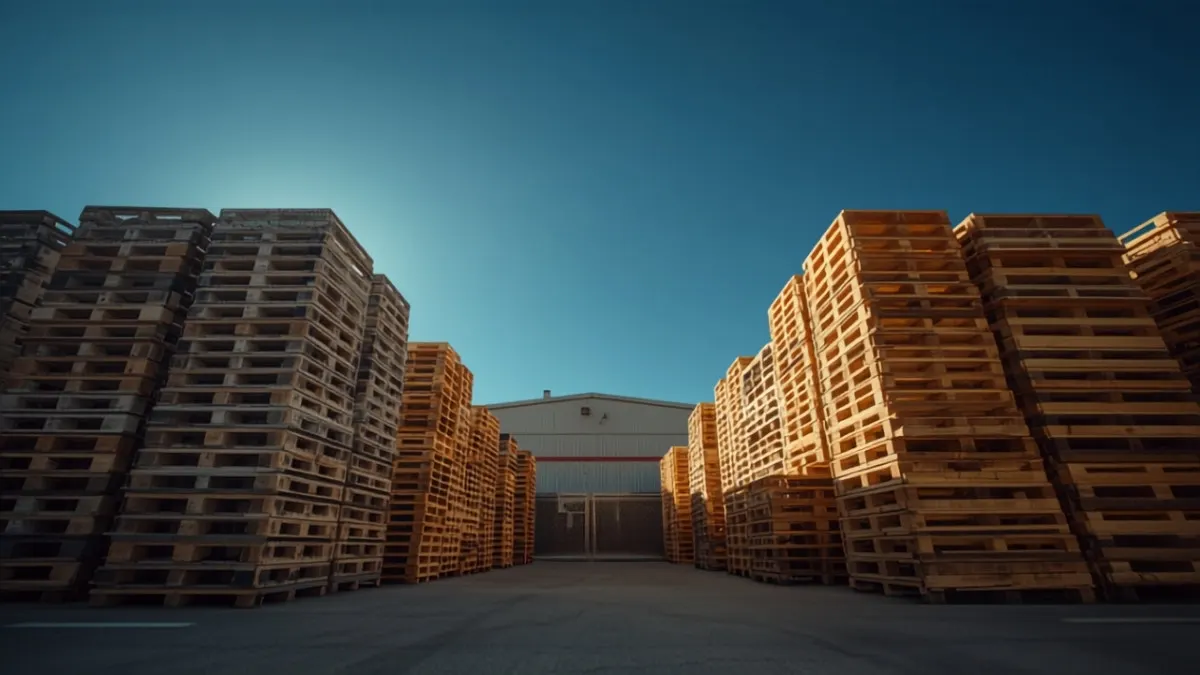
Ask how long wood pallets last and you will get the industry's standard answer: three to five years. The number is not wrong. It is just useless, and every operations manager who has budgeted with it has learned that the hard way.
The same 48x40 that survives five years of gentle grocery turns can die in three weeks on a harsh dock. Nothing about the pallet changed. What changed is everything around it, and that is the real subject here: how long do wood pallets last is a question about your operation, not about the wood — and how to buy accordingly when next year's budget is on the table.
Years Is the Wrong Unit
A pallet does not age sitting still. It ages every time a fork enters it, every time it lands loaded on a trailer deck, every time it goes up into a rack, every wet-dry cycle it sits through in a yard. The industry's working unit for all of that is the trip: one loaded cycle from your dock to a destination and back into service.
Thinking in trips changes the questions. Three to five years tells you nothing about whether Grade A stock is worth its premium on your lanes. Trips does: a platform that costs more but survives several times the cycles is cheaper per trip than the bargain that scraps out after two. It also explains why the same purchase performs so differently across your own network — the pallets feeding your gentle closed loop and the ones going out on one-way lanes are living entirely different lives.
This is also the honest frame for comparing wood against plastic. HDPE platforms run ten years and more in a closed loop where they always come home, against three to five for wood — but in an open loop where platforms leave and rarely return, that lifespan advantage evaporates and the math swings back to wood block pallets that cost a fraction per unit. Our plastic pallets page walks through where each one actually wins.
What Actually Ends a Pallet's Life
Very few pallets die of old age. They are killed, and around Los Angeles they are killed in remarkably consistent ways.
Forklift strikes
The leading cause, and it is not close. Forks that hit the blocks instead of the openings, entries taken at speed, one fork catching a deck board edge and levering it up — each impact either breaks something immediately or starts the split that finishes on a later trip. Docks that slow their fork entries by half a second per pallet get measurably longer life out of the same stock, which makes this a lifespan program that costs nothing to run.
Racking and unsupported spans
A pallet in a rack carries its load across open air between two beams, which is the hardest work a platform ever does. Capacity in that position is a fraction of what the same pallet holds on the floor, and stock with any stringer damage has no business going up. Racked lanes are where higher grade and block construction earn their money; the numbers are in our breakdown of how much weight a pallet can hold.
Weather in an LA yard
Southern California is kind to wood for most of the year and then makes up for it. Winter rain soaks an uncovered stack, the sun bakes it dry, and the cycle repeats — swelling and shrinking the wood around every nail until boards loosen and split ends open up. A season of that costs trips. Getting stacks off bare ground and covering the tops, the same habits covered in our guide to mold on wood pallets, buys them back.
The load itself
Chronic overloading, point loads concentrated on a single deck board, drums on platforms designed for cases — a pallet asked to carry the wrong load, or the right load the wrong way, wears out in a fraction of its rated life. If your freight regularly tests the limits of a standard platform, the durable answer is usually a heavier build, not a faster replacement cycle.
Grade Changes the Math
Buying by sticker price treats every pallet as equal. Buying by cost per trip is how the operations that spend the least actually do it, and grade is the main lever.
New and Grade A stock brings full structural life and clean presentation, and earns its premium on export lanes, retail-facing loads, and racked storage where failure is expensive. Grade B pallets carry the same loads with cosmetic wear at a meaningful discount, which makes them the value play for general warehousing and internal moves — most of the trips in most operations. Grade C hauls one-way freight that is never coming back, where paying for durability nobody will use is simply waste.
The discipline is matching the grade to the lane, not standardizing on either extreme. And it starts with knowing where your platforms go: the operation that sends Grade A stock out on one-way lanes is donating money to whoever receives it. That sorting logic — which end of the yard each incoming pallet belongs to — is the same one we walked through in repair or replace, and the two decisions are easier made together.
Stretching the Life You Already Bought
Before buying longer-lasting pallets, most yards can get more trips out of the ones they have. The habits are not glamorous.
- Slow the forks. Clean entries through the openings, forks all the way in, no lifting by a deck edge. This single habit outperforms every other item on this list.
- Store them dry. Off bare ground, tops covered, air moving between stacks. Weather damage is the one killer that happens while nobody is working.
- Sort at receiving. A cracked stringer spotted at the dock is a repair candidate; the same crack discovered under 2,000 lbs in a rack is an incident.
- Repair what qualifies. A broken deck board on a sound frame is worth fixing. A split stringer usually is not — and on export stock, any repair with untreated lumber voids the ISPM-15 stamp, which turns a fixed pallet into a customs problem.
- Rotate the fleet. First in, first out keeps any one platform from quietly accumulating all the hard trips while newer stock sits.
The Last Trip Is Worth Money
Every pallet reaches the trip that should be its last. What happens next is the difference between a disposal cost and a small revenue line. Platforms that still have structural life left — your surplus, your odd sizes, the stock a customer shipped in that you will never use — are stock we pay cash for through our pallet buying program. The broken and weathered ones ride out on the same truck through our pallet pickup service, with free removal on larger quantities.
For operations with steady volume, that cycle runs on a schedule: recurring pickups clear the yard weekly or biweekly, purchases offset deliveries, and dead platforms stop accumulating in the corner that every warehouse seems to reserve for them. It is the final piece of the trips arithmetic — recovering value at the end of the line lowers the cost of every trip that came before it. If you are working out that math for next year's budget, buying pallets from a yard that handles both ends of the cycle makes the numbers considerably simpler.
Frequently Asked Questions
How many years do wood pallets really last?
Three to five years is the standard figure for a wood pallet in normal service, but the honest answer depends on trips, not time. The same pallet can serve five years in a gentle closed loop or fail within weeks on a harsh, high-volume dock. Handling quality, racking, storage conditions and load discipline matter more than the calendar.
Do Grade A pallets last longer than Grade B?
Grade A stock starts with no repairs and no significant wear, so it has more structural life ahead of it, and it is the right call for racked storage and export lanes. Grade B carries the same rated loads with cosmetic wear at a lower price, which usually makes it the better cost per trip for general warehousing and internal moves. The savings come from matching grade to lane rather than standardizing on either.
What actually makes pallets last longer?
Slow down fork entries. Forklift strikes end more pallet lives than weather, load and age combined, and clean entries through the openings cost nothing. After that, store stacks off bare ground with tops covered, sort damaged platforms out at receiving, and keep repaired pallets off export lanes unless the repair used treated lumber.
Is it worth repairing an old pallet instead of replacing it?
It depends on the component. A broken deck board on an otherwise sound pallet is a quick, worthwhile repair. Damage to stringers or blocks compromises the structure that carries the load, and replacement is usually the safer economics. On ISPM-15 export stock, repairs with untreated wood void the stamp, so treated-lane pallets should be repaired only by someone who can keep them compliant.
Working Out Next Year's Pallet Budget?
Tell us your lanes and volumes and we will quote grades matched to each one — and buy back the platforms you are done with. English or Spanish.
☎ (213) 703-5326 English
☎ (323) 674-6876 Español
REQUEST A FREE QUOTE