Specs & Selection
How Much Weight Can a Pallet Hold? The Three Numbers That Matter
By Bro Pallets LLC Team | Published August 19, 2026
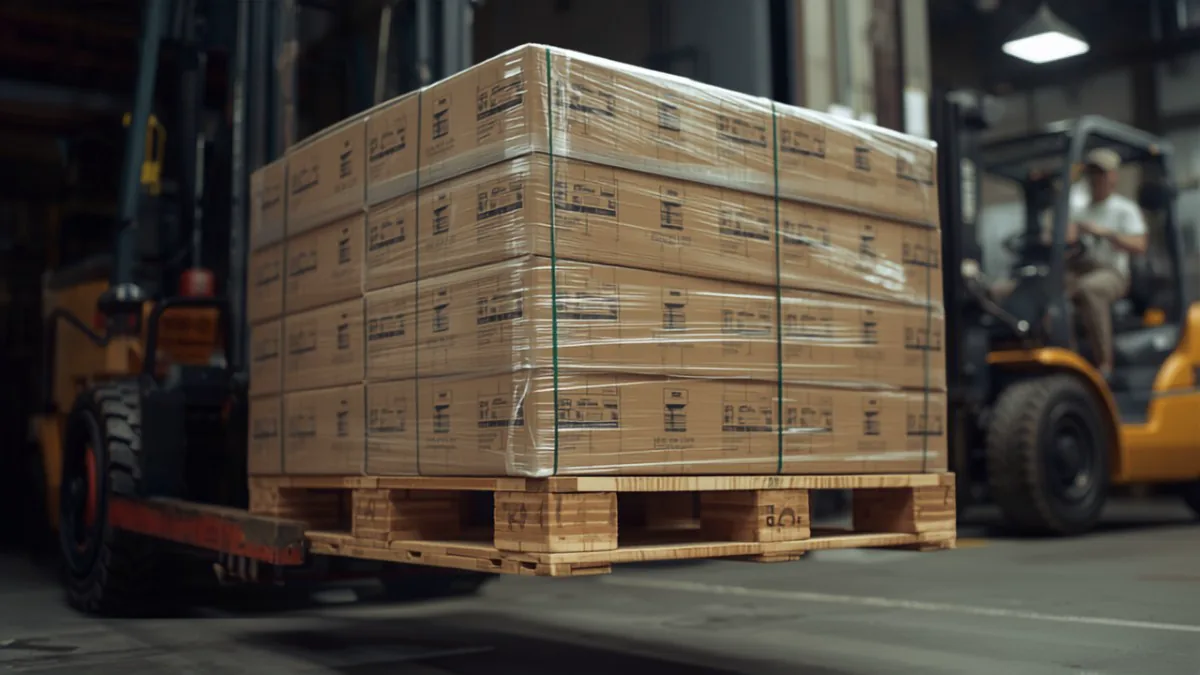
Ask what a pallet holds and you will get a single number back most of the time. That number is usually true and usually the wrong one for the situation the person is actually in.
A pallet has three separate capacities, and they are not close to each other. Confusing them is how a load that sat fine on the floor all week folds the first time it goes into a rack.
Three Numbers, Not One
Static load is what a pallet holds sitting flat on the ground, fully supported underneath. It is the biggest of the three figures and the one quoted most often, because it flatters the pallet.
Dynamic load is what it holds while it is moving — lifted, carried, and set down by a forklift or pallet jack. Motion adds shock, and the deck flexes as the forks take the weight, so the safe figure drops well below the static one.
Racked load is what it holds spanning open beams with nothing under the middle. This is the number that hurts people. Unsupported in the center, the pallet is a beam rather than a platform, and its capacity falls sharply again. If your operation stores product in racking, this is the only figure that describes your reality.
The order never changes: static is the highest, dynamic is lower, racked is the lowest. Spec against the way the pallet will actually be used, not against the headline number.
What a Standard 48x40 Actually Holds
The 48x40 GMA block pallet is the reference point for most of the freight moving through Southern California, so it is worth knowing its range precisely.
| Pallet | Static load | Dynamic load |
|---|---|---|
| 48x40 wood block pallet | About 2,500 to 4,600 lbs by grade | Around 2,500 lbs safe working limit |
| Plastic pallet (HDPE or PP) | Up to about 5,000 lbs, varies by model | Up to about 2,500 lbs, varies by model |
| Reinforced or custom build | Built to the load | Built to the load |
Two things about that table are worth saying out loud. First, the dynamic figure is the one most palletized freight lives under, and it is roughly half the top of the static range. Second, we deliberately have not printed a racked number, because it depends on your beam spacing, your rack style, and how the load sits. Tell us how you rack and we will tell you what the pallet can take. Anyone quoting a universal racking figure is guessing.
Capacity is also a different question from tare weight, which is what the empty pallet itself adds to your freight bill. If that is what you came for, our guide to how much a pallet weighs covers it, and the full profile of the size is in our rundown of 48x40 pallets, including where free 48x40 pallets in Los Angeles come from.
What Moves the Number Up or Down
Two pallets of the same size can be a thousand pounds apart in what they will safely carry. The variables are not mysterious.
- Construction. Block pallets use nine solid blocks in a three-by-three pattern between the decks, which spreads weight more evenly and holds up better in racking than a stringer build. Our comparison of block versus stringer pallets gets into where each one belongs.
- Grade. Grade A stock with every board intact sits at the top of the range. Grade B, structurally sound with cosmetic wear, sits comfortably in the middle. Grade C, with repairs and heavier wear, belongs under lighter, one-way loads.
- Lumber and moisture. Thicker deck boards and hardwood carry more. Wet wood is heavier and weaker than dry wood of the same dimensions, which is one reason pallets left in the rain lose capacity as well as service life.
- Deck coverage. A pallet with tight, closely spaced top boards supports small or soft-bottomed loads far better than one with wide gaps, even when both are rated the same.
- Load distribution. This is the one that breaks pallets rated well above the weight involved. A rating assumes the load is spread across the deck. Concentrate the same weight on two square feet in the middle — a machine base, a stack of steel plate, a single stone slab — and you are testing the deck boards, not the pallet.
Matching the Pallet to the Load
In practice, most decisions fall into three buckets. Ordinary palletized freight — cased goods, cartons, bagged product, most of what moves out of the food plants around Vernon — sits well inside a standard 48x40 in Grade A or B. That is the default for a reason.
Dense product concentrated in a small footprint is the second bucket: tile, stone, castings, coiled steel, batteries, printing stock. The total weight may look manageable while the load per square foot is anything but. This is where custom and reinforced pallets earn their cost, with thicker deck boards, extra blocks, and hardwood where it counts. It is a common order from the machine shops and fabricators around the City of Industry.
The third bucket is anything oversized or oddly shaped, where the load overhangs the deck. Overhang is a capacity problem disguised as a fit problem: the edges of the load carry themselves instead of being carried, and the corners of the pallet take the punishment. A build sized to the product solves it outright.
For wash-down and cold environments, plastic pallets are worth a look, since a consistent molded platform does not lose capacity to moisture the way wood can. The full range of what we stock, in every grade, is on our products page — and if you are simply comparing where to buy pallets in the area, that is the place to start.
Signs a Pallet Is Over Its Limit
Wood tells you before it fails, if anyone is looking. Visible deflection in the top deck under load, cracked or split stringers and blocks, nails backing out of the deck boards, or a pallet that sits crooked once loaded are all the same message. So is a load that shifts each time it is moved.
Pull those out of service rather than sending them into a rack. Our pallet inspection checklist covers what to look for on receipt, which is where a bad pallet costs you least. Anything that fails, we will take on a pallet pickup run.
Frequently Asked Questions
How much weight can a standard 48x40 wood pallet hold?
A standard 48x40 wood block pallet carries roughly 2,500 to 4,600 lbs as a static load sitting on the floor, depending on grade and construction. Once it is in motion on a forklift, plan on a safe ceiling near 2,500 lbs. Racked capacity, spanning open beams, is lower again and depends on your rack setup.
What is the difference between static, dynamic and racked load?
Static load is what the pallet holds fully supported on the ground. Dynamic load is what it holds while being lifted and moved, where flex and shock reduce the safe figure. Racked load is what it holds spanning beams with no support in the middle, which is the lowest of the three. Always spec against the way the pallet will actually be used.
Do plastic pallets hold more weight than wood?
Not automatically. Plastic pallets run up to about 5,000 lbs static and 2,500 lbs dynamic depending on the model, which puts them in the same broad territory as wood. Their real advantages are consistency, sanitation, and immunity to moisture rather than raw capacity. For heavy concentrated loads, a reinforced wood build is usually the better answer.
What happens if I overload a pallet?
Usually the deck boards give first, then the stringers or blocks, and the failure tends to happen during a lift rather than while the load is standing still. That is the worst moment for it, because the load is in the air. Overhanging product, concentrated point loads, and reusing damaged pallets are the three most common causes we see.
Not Sure Which Pallet Your Load Needs?
Tell us the weight, the footprint, and whether it goes into racking, and we will spec the pallet that handles it — in English or Spanish.
☎ (213) 703-5326 English
☎ (323) 674-6876 Español
REQUEST A FREE QUOTE