Shipping & Handling
How to Stack a Pallet So the Load Arrives Standing
By Bro Pallets LLC Team | Published August 30, 2026
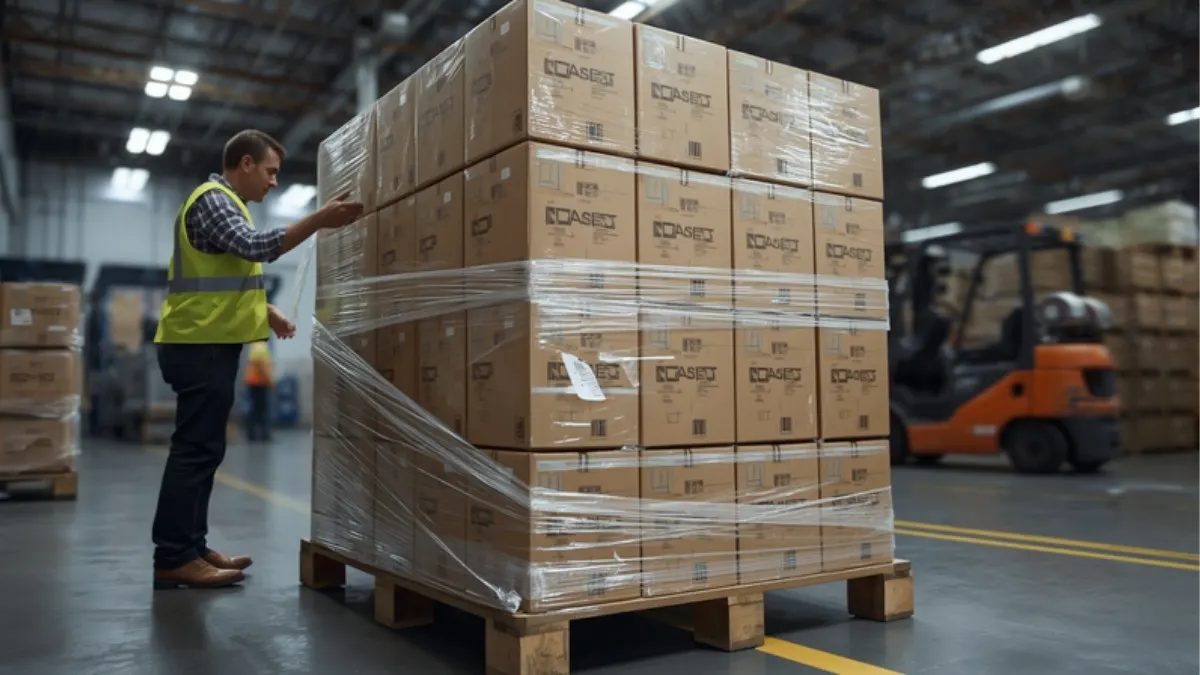
The photo arrives before the freight does. A receiver two states away sends three pictures of a load leaning ten degrees off vertical, cases crushed at the bottom corner, wrap flapping loose at the top, and one sentence: refused at dock. Whoever built that stack spent maybe six minutes on it. The claim it just generated will take weeks.
Here is the part most stacking advice skips: about half of what went wrong in that photo was decided before the first box went on. The platform underneath — its size, its condition, its deck coverage — sets the ceiling on how good the stack above it can be. So this walkthrough of how to stack a pallet starts lower than most.
Start With the Platform, Not the Boxes
A stack is only as square as the thing it stands on. Before anyone reaches for the first case, three checks on the pallet itself take under a minute and prevent the failures that no wrapping technique can fix.
Match the footprint to the freight. The standard 48x40 pallets that move through Los Angeles warehouses fit standard racking and load two across in a 53-foot trailer, which is exactly why they are the default. But default is not universal. Cases that leave four inches of bare deck on every side will walk during transit, and cases that hang past the edge get crushed. If your case dimensions never divide cleanly into 48x40, a custom size pallet built to your actual case pattern removes the problem at the source instead of fighting it with wrap.
Check the deck, not just the stringers. A pallet can be structurally sound and still be wrong for the load. Wide gaps between deck boards are fine under rigid cases and a genuine hazard under soft goods, bagged product, or thin-walled cartons, which sag into the gaps and destabilize every layer above them. Bagged and sagging freight wants high deck coverage; our standard block pallets come in grades with tighter board spacing for exactly that reason.
Respect the rating. A 48x40 carries roughly 2,500 lbs safely while it is moving. Static capacity runs higher, but freight spends its life being moved. If the planned load flirts with that ceiling, the answer is a second pallet or a heavier-duty platform, not optimism. The full breakdown of static versus dynamic versus racked numbers is in our guide to how much weight a pallet can hold.
Column Stacking Beats the Brick Pattern
The instinct most people bring from stacking firewood is to interlock: rotate every layer so the boxes overlap like bricks in a wall. It feels sturdier. For corrugated boxes it is usually the wrong call, and the reason is where a box carries its strength.
A corrugated case is strongest at its corners and edges, where the vertical walls meet. Column stacking — every box directly on top of the one below, corners aligned all the way down — keeps that strength stacked in continuous vertical lines from the top layer to the deck. Interlocking breaks those lines: the corner of one box lands on the unsupported middle of the box below it, which is the weakest point on the panel. The wall of the bottom case starts creeping inward somewhere around Bakersfield, and the lean in the receiver's photo is the end of that story.
Interlocking still has a place. Very light cases on a long rough haul sometimes benefit from the extra tie between layers, and mixed-size freight forces compromises. But the modern answer to layer stability is a column stack tied together with wrap and, on taller loads, a slip sheet between layers — not sacrificed corners.
Weight goes low and center
Heaviest cases on the bottom layer, lighter as you rise, and the load centered over the deck rather than favoring one side. A stack with its mass off-center steers the pallet jack on ramps and turns, and it works the wrap on one side harder than the other for the entire ride. If one case is dramatically heavier than everything else, it belongs in the middle of the bottom layer, not at a corner.
Keep the top flat
A level top layer is not cosmetic. Uneven tops concentrate the top wrap on high points, leave low cases loose, and eliminate the option of safely double-stacking the pallet in the trailer — which a carrier will do whether or not the top of your load invited it. If the case count does not divide evenly, finish with a flat partial layer in the center rather than a staircase around the rim.
Overhang Is the Silent Load Killer
Freight hanging past the pallet edge loses a large share of its stacking strength, because the box wall that should be carrying load down into the deck is carrying it into open air. Overhang is also where forklift damage happens, where the wrap wears through against the case edge, and what turns a tight trailer load into a puzzle that does not fit. The discipline is simple and non-negotiable: nothing extends past the deck, on any side, on any layer.
Underhang — freight recessed far inside the edges — is gentler but not free. It wastes deck, and it leaves the load nothing to brace against inside the wrap. When the case pattern will not cooperate in either direction, that is the signal to revisit the platform footprint rather than accept a bad compromise every single shipment.
Wrapping That Actually Holds
Stretch film does two jobs: it ties the cases to each other, and it ties the whole block to the pallet. Most failed wraps did the first job and skipped the second.
- Anchor to the pallet, not just the freight. The first wraps go low enough to catch the deck boards or blocks, locking film onto wood. A load wrapped only box-to-box is a tidy unit that can slide clean off its platform.
- Work upward in overlapping spirals. Each pass overlaps the previous one by about half a film width. Gaps between passes are hinge points.
- Stretch as you go. Film holds by tension, not by quantity. Loose film in generous amounts is decoration; fewer passes pulled tight outperform many passes laid on slack.
- Finish high and come back down. On tall loads, a pass over the top layer and back down locks the top cases that a single upward spiral leaves loose.
- Add corner boards on heavy or repeat lanes. Vertical corner protectors spread the film tension along the full edge, protect case corners from the film itself, and stiffen the whole column. For loads that ship weekly, they pay for themselves in avoided claims.
None of this rescues a bad stack. Wrap is the last step of a good load, not a repair kit for a leaning one.
What Q4 Does to Loading Discipline
Every fourth quarter the same thing happens across Los Angeles warehouses: volume spikes, temporary crews arrive, and stacking quality quietly collapses right when freight density in every trailer peaks. The workers are not careless; nobody taught them how to stack a pallet beyond making it fast, and the pace does not invite questions.
The fix costs one page. A laminated sheet at the loading station — footprint check, heavy low, columns aligned, nothing past the edge, anchor the wrap to the wood — converts this article into a habit that survives seasonal turnover. Pair it with a platform supply that does not run dry mid-rush; our piece on peak season pallet supply covers how LA operations keep stock ahead of the surge, and our products page lists what the yard stocks in every size and grade, all year.
And if the platform side of your loading problem keeps coming back — wrong sizes, weak decks, surprise shortages — that is a supplier conversation. Buying pallets from a yard that asks what you are loading before quoting is how these stacking problems stop being weekly events.
Frequently Asked Questions
Should boxes on a pallet be stacked in columns or interlocked?
Columns, in most cases. Corrugated boxes carry their strength in their corners, and column stacking keeps those corners aligned in continuous vertical lines down to the deck. Interlocking places corners on the weak center of the box below, which reduces the stacking strength of the load. Use stretch wrap, and slip sheets on tall loads, to provide the stability that interlocking used to.
How much can I safely load on a standard 48x40 pallet?
Plan around roughly 2,500 lbs for a load that will be moved with forklifts and pallet jacks, which is the practical dynamic limit for a standard 48x40. Static capacity is higher, up to 4,600 lbs depending on grade, but freight in motion is what the stack has to survive. Heavier planned loads call for a reinforced or custom platform.
Is a little overhang acceptable on a pallet load?
No amount of overhang is worth planning for. Cases extending past the deck edge lose a significant share of their stacking strength, absorb forklift and transit impacts directly, and wear through stretch film at the contact edge. If your case dimensions never fit inside the footprint cleanly, the durable fix is a pallet sized to your case pattern rather than a compromise repeated on every shipment.
Why do wrapped pallet loads still shift in transit?
The most common cause is film that was never anchored to the pallet itself. Wrap that only circles the boxes creates a neat block that can slide off the deck as one unit. Start the wrap low enough to catch the deck boards or blocks, overlap each pass, keep tension on the film, and make a return pass over the top layer on tall loads.
Loading Problems That Trace Back to the Platform?
Tell us what you ship and how it is packed, and we will match the footprint, deck and grade to the load — delivered across LA and Southern California.
☎ (213) 703-5326 English
☎ (323) 674-6876 Español
REQUEST A FREE QUOTE