Supply & Planning
Peak Season Pallet Supply in Los Angeles: Why Q4 Gets Tight
By Bro Pallets LLC Team | Published August 19, 2026
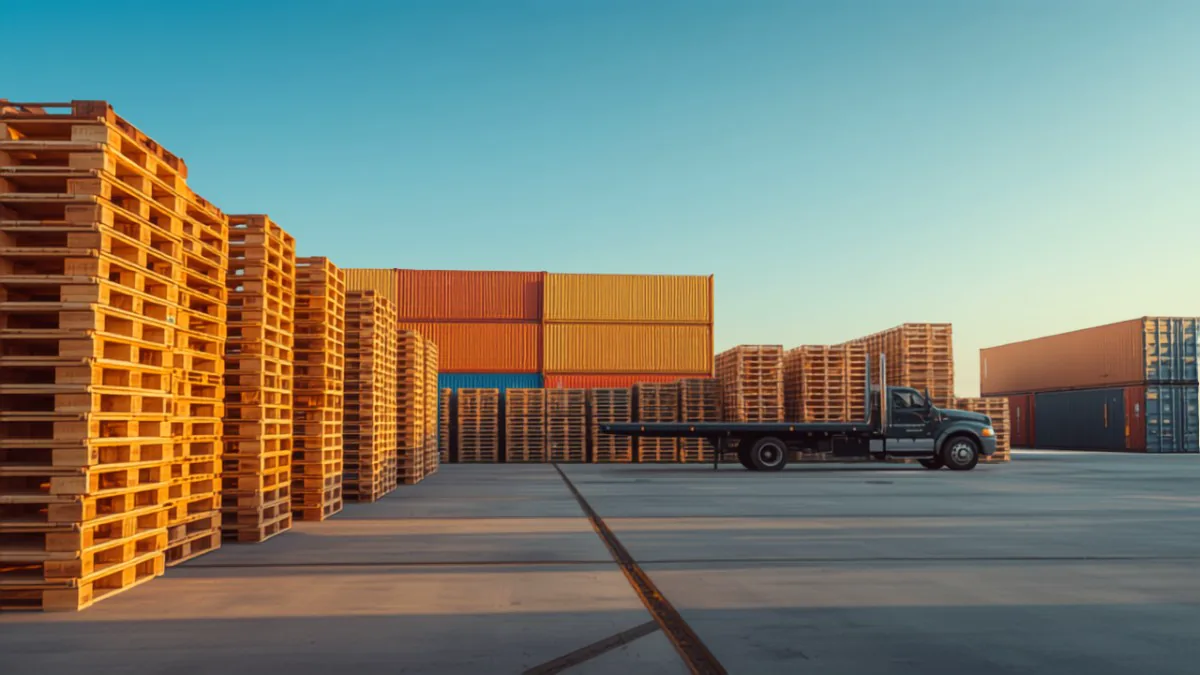
August is the quiet month that decides how your fourth quarter goes. Import volume through the San Pedro Bay port complex is already climbing toward the holiday build, warehouses across the Inland Empire are filling, and the pallets that will move all of that freight are still, for a few more weeks, easy to get.
By late October the same order takes longer, and the grade you wanted may not be sitting in the yard. That shift catches operations off guard every year, and the reason has less to do with demand than most buyers assume.
Recycled Pallets Are a Byproduct, Not a Faucet
New pallets get built to order. Recycled pallets do not. Every used pallet in circulation arrived somewhere on a load, got emptied, and was released back into the market by whoever received it. That is the entire supply mechanism, and it runs on a delay.
During a normal month that delay is invisible. During peak season it becomes the whole story. Freight surges, so demand for pallets rises immediately, but the pallets themselves are still sitting under product in a warehouse waiting to be picked. Receivers hold empties longer because their own outbound volume is up, staging space disappears, and recovery routes slow down. Demand spikes in a week; supply catches up over a month.
That gap is why used stock tightens exactly when everyone wants it, and why the buyers who plan around it wait less and choose from more than the ones who call in November.
The Los Angeles Calendar
Southern California feels this earlier and harder than most regions. The Ports of Los Angeles and Long Beach together handle roughly 40 percent of all containerized imports entering the United States, and the goods that will sell in December are landing here now. The I-710 corridor from the port complex to the inland warehouses is the busiest freight highway in the country in an ordinary week; in peak season it is the pressure gauge for the entire local supply chain.
Here is how the season tends to unfold from a pallet yard's point of view:
| Window | What happens | What to do about it |
|---|---|---|
| August | Imports climbing, pallet supply still comfortable | Forecast your Q4 burn rate and get a quote |
| September | Retail build begins, orders get larger | Lock in a standing order and reserve your sizes |
| October | Grade A thins out first, empties come back slowly | Take deliveries early, stage what you can |
| November | Peak outbound, rush orders everywhere | Stay flexible on grade, order in fuller loads |
| December into January | Empties flood back as inventory clears | Schedule pickup of your own empties |
Nothing about that calendar is exotic. It is the same rhythm every year, which is precisely why it can be planned for instead of reacted to.
What Runs Short First
Not everything tightens at the same rate, and knowing the order helps you decide where to be picky and where to bend.
- Grade A goes first. Clean, like-new stock is the smallest pool to begin with, and retail-facing shippers compete hardest for it in Q4. If your load does not need display-quality wood, do not spend the season chasing it.
- 48x40 GMA feels it most. It is the size everyone wants, so it drains fastest even though we carry it in the most depth. Our breakdown of 48x40 pallets, including where free pallets in Los Angeles come from, covers what that size does and does not handle.
- Heat-treated export stock needs a runway. Treatment is a kiln process that has to hold the core of the wood at 56°C for 30 continuous minutes, and it cannot be compressed into an afternoon. If you ship internationally in Q4, ISPM-15 heat treated pallets belong on your September list, not your November one.
- Custom and oversized builds stretch. Simple custom dimensions normally run 3 to 5 business days; reinforced or heat-treated builds run 7 to 10. Those windows widen when the shop is full.
- Grade B and C hold up best. The workhorse grades stay the most available, which is why they are the smart default for internal transfers and one-way outbound during the crunch.
Five Moves That Actually Work
Planning for peak season is not complicated. It is a handful of decisions made in August instead of November.
Size the order to your real burn rate. Pull last year's Q4 outbound count, not your average month. Most operations underestimate here because they remember the shortage rather than the volume that caused it.
Put a standing order in place. A recurring pallet supply program reserves your sizes and grades against yard stock on a set schedule, so your pallets are allocated before the rush instead of competing with it. That is the single biggest difference between a smooth Q4 and a weekly scramble.
Order in fuller loads. Per-unit pricing improves with volume, and one large delivery beats four small ones when trucks are the constraint. Delivery is free on orders of 100 or more anywhere in our service area, and our guide to buying pallets in bulk walks through where the price breaks land.
Decide your grade tolerance in advance. Tell us the minimum you can live with by application: Grade A for the customer-facing loads, Grade B for the racking and the internal moves. A buyer with a defined floor gets filled from a much bigger pool than one who insists on top grade for everything.
Clear your empties. Broken and mismatched pallets pile up fastest in the months you have the least room for them. Our pallet pickup service takes them off your hands, and when the stock is still sound we buy it, which turns a space problem into a credit.
If You Are Reading This in November
Then the planning window is behind you, and the question becomes what still moves fast. Standard 48x40 Grade B remains the most likely same-week fill because it is the deepest stock in the yard. Flexibility on grade helps more than anything else, and so does giving us the whole picture on the first call: size, grade, quantity, address, dock access, and the date you actually need it on the floor.
We work out of our yard on East 78th Street in the Florence district of South LA, minutes from the I-110 and a straight shot down the I-710 to the port complex, with routes through Vernon and Commerce most days of the week. Mid-season, that proximity is what buys back some of the time the calendar took away. The full coverage map is on our service areas page, and the sizes and grades we keep in the yard are listed on our pallet products page. If you are still deciding where to buy pallets at all, start there.
Frequently Asked Questions
When should I order pallets for peak season in Los Angeles?
Late August through September is the window. Imports are already climbing but pallet supply is still comfortable, so you can reserve sizes and grades before the fourth-quarter build competes for the same stock. Heat-treated export pallets and custom builds should be ordered even earlier, since treatment and fabrication both need lead time.
Why do used pallets get harder to find in the fourth quarter?
Recycled pallets only come back into the market when a receiver empties and releases them, so supply lags demand by weeks. In peak season, warehouses hold empties longer because their own volume is up and staging space is scarce. Demand rises in days while recovery takes a month, and that gap is what buyers feel as a shortage.
Can I still get pallets on short notice during peak season?
Usually, yes, if you are flexible. Standard 48x40 Grade B is the deepest stock we carry and the most likely to fill on short notice. Specific grades, custom dimensions, and heat-treated export pallets are the requests that run into lead times once the season is underway.
Is it cheaper to buy pallets before peak season?
Ordering early mainly buys you availability and choice rather than a seasonal discount. Where you do save is volume: per-unit pricing improves as the order grows, delivery is free on 100 or more, and a standing order holds your pricing for the season instead of leaving you to negotiate in the middle of the rush.
Lock In Your Q4 Pallet Supply
Tell us your sizes, grades, and monthly volume, and we will reserve stock against your schedule before the season tightens — in English or Spanish.
☎ (213) 703-5326 English
☎ (323) 674-6876 Español
REQUEST A FREE QUOTE