Crating & Shipping
Art Shipping Crates in Los Angeles: What Makes a Good One
By Maynor Martinez, Bro Pallets LLC | Published August 3, 2026
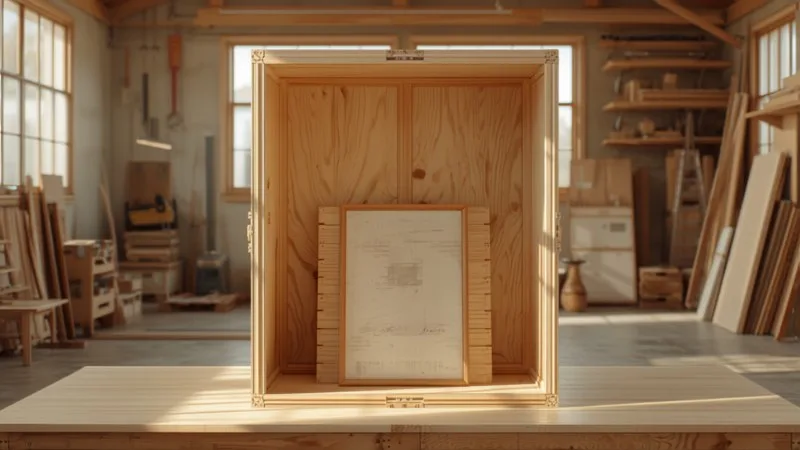
Los Angeles moves an enormous amount of art. Galleries in Culver City and the Arts District, auction houses, studios, private collectors, and the prop and set departments feeding the film industry all send work out constantly — across town, to a fair, or overseas. What holds all of that together in transit is the crate, and a crate built for a lathe is not the crate a painting needs.
The difference is where the value sits. With machinery, the crate protects against crushing and shifting. With art, it also has to protect against pressure on a surface, vibration coming up through the road, and the swings in humidity a piece meets between a climate-controlled gallery and the back of a truck. Getting that right is the difference between a piece that arrives ready to hang and one that arrives with a story you do not want to tell the owner.
Why Art Needs a Different Crate
A general shipping crate is built around one question: will the box survive the trip? An art crate has to answer a second one: will the contents survive untouched, down to the surface? That shifts the whole design inward. The outer shell still matters — our overview of wooden shipping crates in Los Angeles covers that side — but for art, most of the engineering happens between the wall of the crate and the object.
The threats are specific. A framed canvas can flex if it is braced against its face instead of its edges. A glazed work can crack from a single sharp shock. A bronze can shift and dent a soft patina. Raw wood off-gasses and swings with humidity, which fine surfaces do not forgive. None of these are solved by a stronger box alone; they are solved by how the piece is held inside it.
How We Build an Art Crate
Every art crate we build starts from the piece, not from a catalog size. We measure the work, decide how it needs to be held, and build the box around that. The tools we reach for depend entirely on what is going inside:
- Closed-cell foam padding: cushions fragile pieces and cradles them so nothing bears on a painted or glazed surface.
- Wood blocking and bracing: locks the piece so it cannot shift, holding a framed work by its edges rather than its face.
- Vibration dampening: isolates the contents from road shock coming up through the truck floor.
- Moisture barriers: buffer the piece against the humidity swings between a controlled room and an open dock.
- Anti-static liners: for pieces with sensitive electronic or media components, such as certain contemporary and installation works.
- Custom internal mounts: for odd shapes — sculpture, mixed-media, and anything that will not sit flat.
The shell around all of that is usually plywood panel on a lumber frame, which gives a smooth interior that will not snag a wrapped surface, or a heavier combination build for weight and size. Our full custom wooden crate box guide walks through those materials in depth, and the same crating capability that handles a machinery crate is what builds a fine-art one — the craft is the same, aimed at a different kind of load.
Matching the Crate to the Piece
Not every piece needs the full treatment, and part of an honest quote is telling you where the line is. A poster in a light frame does not need what a glazed painting or a marble bust does. Roughly:
| Piece | What it usually calls for |
|---|---|
| Framed canvas or work on paper | Edge bracing, foam, moisture barrier |
| Glazed / glass-fronted work | Heavy cushioning, vibration dampening |
| Sculpture or 3D object | Custom internal mounts and blocking |
| Antique or delicate finish | Soft contact points, moisture control |
| Piece traveling and returning | Reusable screwed-lid build |
That last row matters for a city like this. A work going out to a fair and coming back — a common pattern for LA galleries — is better in a reusable crate with a screwed lid than a nailed one-way box, so it can be opened, closed, and shipped home without rebuilding the crate each leg.
Crating Art for Export Out of LA
The Ports of Los Angeles and Long Beach and LAX cargo send LA art all over the world, and export adds a compliance layer. Any solid-wood parts of a crate leaving the country have to meet the ISPM-15 standard — heat treated and stamped — or the shipment can be held or turned back at the destination port. We build export art crates with ISPM-15-compliant lumber so that is handled before the piece ships. One useful detail: crates made entirely of plywood are exempt from ISPM-15, since plywood is a manufactured product, which occasionally simplifies an international art shipment.
Getting an Art Crate Built in LA
Whether it is a single canvas for a collector or a run of crates for a gallery clearing a show, we build to the piece at our LA yard. Tell us the dimensions, the medium, whether it is a one-way or round trip, and where it is headed, and we will spec the interior and the shell to match. You can see the range on our custom crate boxes page or start with the details on the free quote page, and the broader lineup of what we build is on the products page.
Frequently Asked Questions
What makes an art shipping crate different from a regular crate?
A regular crate is built to survive the trip; an art crate also has to keep the contents untouched down to the surface. That means the interior does most of the work — closed-cell foam, edge bracing, vibration dampening, and moisture barriers hold the piece so nothing presses on a painted or glazed surface and road shock never reaches it.
Can you build a custom crate for a single piece of art?
Yes. We build to the piece rather than to a catalog size, and there is no strict minimum — a single canvas, sculpture, or antique is welcome, as is a full run of crates for a gallery. We measure the work and design the interior and shell around how it needs to be held.
Do art crates for international shipping need ISPM-15 treatment?
Any solid-wood parts of a crate leaving the country must meet the ISPM-15 standard, meaning heat treated and stamped, or the shipment can be held at the destination port. We build export art crates with ISPM-15-compliant lumber. Crates made entirely of plywood are exempt, since plywood is a manufactured product.
How should a crate handle a piece that travels and comes back?
For art going to a fair or exhibition and returning — common for LA galleries — a reusable crate with a screwed lid is the right build. It can be opened, repacked, and shipped home without destroying the crate, unlike a nailed one-way box, which protects both the piece and your budget over multiple legs.
Shipping Art or Antiques Out of Los Angeles?
Tell us the piece, its dimensions, and where it is headed, and we will build a crate around it — local or export, one-way or round trip, in English or Spanish.
☎ (213) 703-5326 English
☎ (323) 674-6876 Español
REQUEST A FREE QUOTE