Heavy Equipment Crating
Heavy Machinery & Equipment Crating in Los Angeles: Export-Ready Wooden Crates
By Maynor Martinez, Bro Pallets LLC | Published June 9, 2026
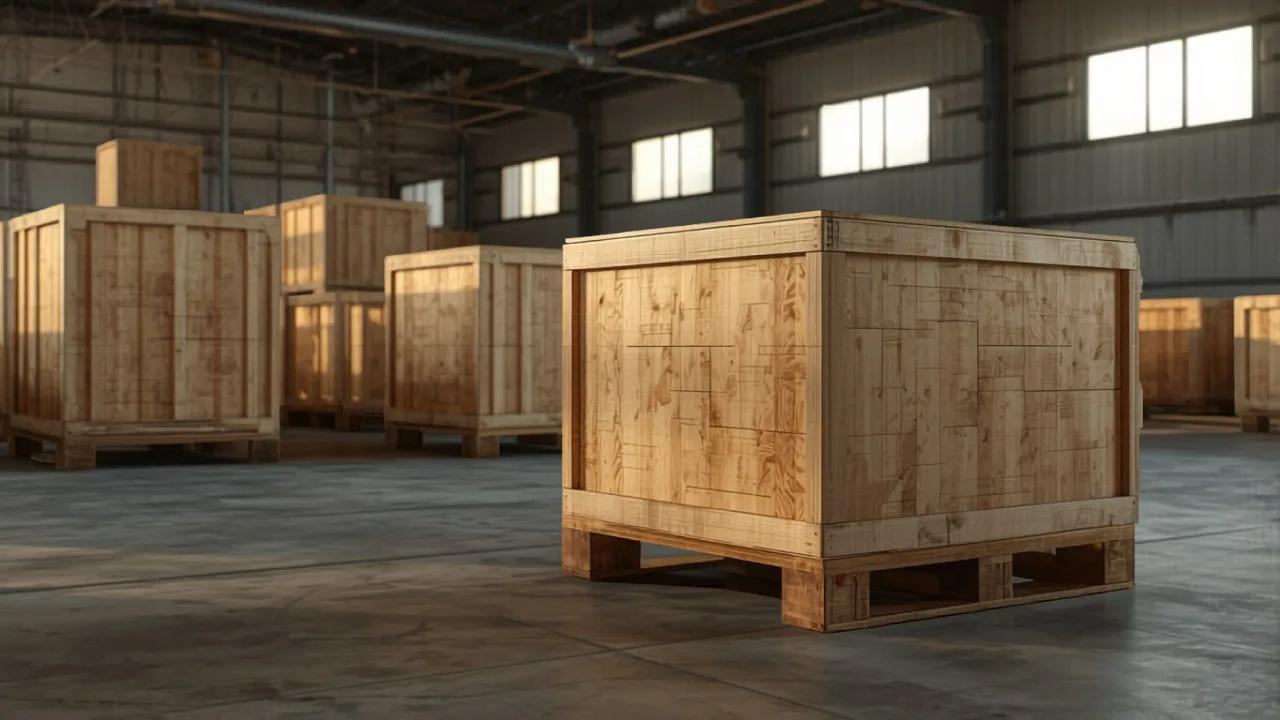
Crating a CNC machine, a generator, or a piece of aerospace tooling is a different problem from boxing up ordinary freight. The load is heavy, often off-center, sometimes worth more than the truck carrying it, and a single bad jolt in transit can turn a six-figure machine into a warranty fight. A crate built for that job is engineered around the equipment, not pulled off a shelf, and the difference shows the first time the unit is forklifted onto a container.
This walks through why machinery needs purpose-built crating, the crate styles used for heavy equipment, what actually goes into the build, and the export rules that apply when the box leaves the country. For a broader look at choosing between crate styles for general freight, the shipping crates guide covers the basics, and when you need more than a pallet explains the pallet-versus-crate decision.
Why Machinery Needs More Than a Pallet or a Stock Crate
A standard pallet supports a load from below and trusts stretch wrap to hold it. That works for stacked cartons. It does not work for a 4,000-pound machine with a high center of gravity, exposed controls, and mounting points that concentrate stress. The risks a real machinery crate is built to handle are specific:
- Shifting and tipping. Equipment that is heavier on one side wants to move. Without internal bracing and a bolt-down base, it walks across the deck and loads the walls.
- Concentrated weight. The load rides on a few feet or mounting pads, not a flat bottom, so the base has to spread that point load or the equipment punches through.
- Shock and vibration. Sensitive machinery needs isolation — foam, blocking, or spring mounts — not just a rigid box.
- Handling damage. Forklift forks, crane straps, and clamp trucks all attack a crate from different angles. The base and framing have to survive all three.
Crate Styles for Heavy Equipment

The right style depends on the equipment, the transport mode, and whether it ships overseas. The common builds for machinery are:
- Crate on skid (skidded base). The equipment is bolted to a heavy timber skid base with forklift and crane access designed in. Used for very heavy units where the base does the structural work and the sides are protection rather than support.
- Closed export crate. A fully enclosed plywood-and-lumber box for high-value or weather-exposed equipment, often with a sealed vapor barrier and desiccant for ocean freight.
- Open or slat crate. A framed, partially open crate for rugged equipment that needs containment and bracing but not full weather protection — lighter and cheaper where it fits.
- Reinforced oversized crate. For machinery that exceeds standard footprints, built on the same logic as oversized pallets, with upgraded lumber and engineered load paths.
What Actually Goes Into a Machinery Crate Build
A crate that looks like a wooden box is hiding a fair amount of engineering. The build starts from the equipment's weight, dimensions, and center of gravity, and works outward:
- A base rated for the real weight, with skids and fork pockets positioned so the loaded crate can actually be lifted without racking.
- Bolt-down or strap-down anchoring so the machine cannot shift inside the crate, plus internal blocking and bracing keyed to the high and heavy points.
- Cushioning where it matters — foam or isolation under sensitive assemblies, rigid blocking everywhere else.
- Cleated plywood panels and proper fastening, not nails into end grain, so the box holds together through repeated handling.
- Moisture control for ocean freight, a sealed barrier bag and desiccant to keep condensation off bare metal across weeks at sea.
Because every machine is different, this is custom work by definition. Our custom wooden crate boxes are built to the unit, and complex equipment can also ride on engineered custom pallets when a full crate is more than the job needs.
Export: ISPM-15 for Equipment Crates
Any solid-wood crate or skid leaving the country has to meet ISPM-15, the international standard for wood packaging. The lumber is heat treated and stamped with the IPPC mark, and a crate without it can be held, fumigated, or returned at the destination port — an expensive delay for a machine on a schedule. The same rule that applies to export pallets applies to crates, and the export pallets guide covers how it plays out at the Port of LA and Long Beach. We build export crates from heat treated, ISPM-15 compliant lumber so the box clears customs the first time.
Los Angeles generates a lot of this work. Aerospace and defense suppliers in the South Bay and San Fernando Valley, film and entertainment gear, semiconductor and industrial equipment all move on custom crates, and most of it ships internationally. As a local shipping crate supplier los angeles manufacturers rely on, building to the equipment on site beats waiting on an out-of-state catalog crate that may not fit the load.
How to Spec a Machinery Crate
A useful crate quote needs the equipment's weight, its outside dimensions, where it can be lifted or bolted, whether it ships by truck or ocean, and the destination. With that, a crate can be engineered to the load rather than oversized "to be safe," which keeps both the protection and the freight cost in line. Tell us what is shipping and where it is going and we will spec the build, confirm ISPM-15 if it is leaving the country, and quote it.
Shipping a Machine? Let Us Build the Crate
Send us the weight, dimensions, lift points, and destination. We engineer the crate to the equipment, build it ISPM-15 compliant for export, and have it ready locally. No obligation quote.
☎ (213) 703-5326 English
☎ (323) 674-6876 Español
REQUEST A FREE QUOTE