Plastic Pallets
Plastic Pallets for Sale in Los Angeles: A Practical Buying Guide
By Bro Pallets LLC Team | Published July 21, 2026
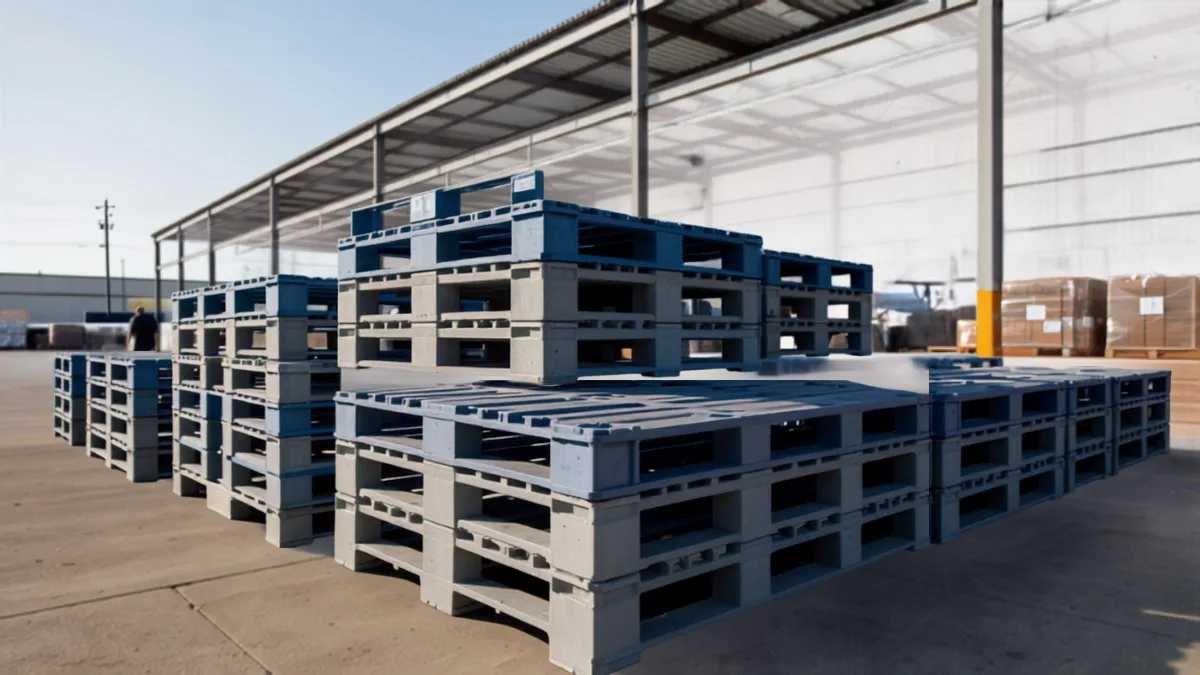
Most buyers who reach us about plastic already know why they want it. The question they actually need answered is a narrower one: how do you buy plastic pallets in Los Angeles without overpaying for capacity you will never use? Plastic is a different purchase than wood. It costs several times more per unit up front, it pays that back only in certain operations, and stock moves differently. This walks through how the buying decision really works so you order the right thing once.
If your operation is a good fit for it, plastic is one of the best long-term platforms you can own. If it is not, you will spend a lot of money to solve a problem you did not have. Sorting out which camp you are in is the whole game, and it comes down to how your pallets travel. For the fuller side-by-side, our guide on wood vs. plastic pallets lays out the tradeoff in detail; here the focus is on the purchase itself.
Open-Loop vs. Closed-Loop: The One Question That Decides It
Plastic earns its price in closed-loop systems — setups where the same pallets cycle back to you trip after trip. Think of a captive fleet moving between two of your own facilities, or a washdown line where the pallet never leaves your control. In that world, a plastic pallet that lasts 10-plus years instead of the 3 to 5 you get from wood quietly wins on cost per trip, even at a higher sticker price.
Open-loop is the opposite. If your pallets leave on outbound freight and never come home, you are effectively giving away every unit you ship. Paying premium plastic prices to send a pallet one-way and never see it again rarely makes sense. For most Los Angeles businesses running open-loop supply chains, wood is the better value, and we will tell you so rather than sell you plastic you do not need.
Where Plastic Actually Pays Off
Setting aside the loop question, a few environments make plastic worth it almost regardless of trip economics, because wood simply cannot do the job:
- Food and pharmaceutical handling: Non-porous HDPE and polypropylene can be pressure-washed and sanitized, which is why FDA- and USDA-regulated lines lean on them. Our note on plastic pallets for food, pharma, and cold storage covers the compliance angle.
- Cold storage: Rated from roughly -20°F to 120°F, plastic holds up in freezers where wood absorbs moisture and warps.
- Export shipping: Plastic is ISPM-15 exempt — no heat treatment or fumigation stamp required — so it clears customs in 180-plus countries without the wood-packaging paperwork.
- Splinter- and nail-sensitive work: Electronics, automotive, and clean assembly lines benefit from a platform with no protruding nails, which also keeps you on the right side of Cal/OSHA.
New vs. Used Plastic Pallets
Plastic is sold both new and used, and the gap between them is smaller than it is with wood because plastic does not degrade the way wood does. A used HDPE pallet that has not been cracked or gouged can have most of its service life still ahead of it. That makes reconditioned plastic an appealing middle path for buyers who want the durability without the full new-unit price.
The catch is stock. Plastic does not turn over in the yard the way used wood does, so availability shifts week to week by size, color, and model — nestable versus stackable, rackable versus display. That is why our plastic stock is quote-and-call rather than a fixed shelf: the honest answer to “what do you have” depends on what came through recently. Tell us the model and quantity you are after and we will tell you what is on hand and what we can source.
Matching the Pallet to the Load
Not all plastic pallets are interchangeable. A light nestable pallet built for display shipping is not the same tool as a rackable pallet rated to hold thousands of pounds on beam racking. Load capacity on plastic runs up to around 2,500 lbs dynamic and 5,000 lbs static depending on the model, so the spec that matters is not “plastic” — it is which plastic. If you are still mapping models to jobs, our overview of the types of plastic pallets breaks down nestable, stackable, and rackable designs.
How Plastic Pallets Are Priced Here
There is no published price sheet for plastic, and that is deliberate rather than evasive. The per-unit number swings with the model, whether it is new or reconditioned, the quantity, and current availability, so any single posted price would be wrong for most orders. What we can do is give you a fast, honest quote once we know the model, the count, and your delivery location. Larger orders get better per-unit pricing, and delivery is free anywhere in our service area on orders of 100 or more.
When you compare a plastic quote against wood, compare cost per trip, not cost per pallet. A $15 wood pallet that lasts four one-way trips and a plastic pallet that lasts hundreds of closed-loop trips are not the same math, and the sticker price hides that. If you want the wider inventory and grades side by side before deciding, our product page lists every option, and you can start a request on the free quote page.
Buying Plastic Pallets the Right Way
A good plastic order starts with three answers: the environment the pallet lives in (freezer, washdown, export, racking), the load it has to carry, and whether it comes back to you or ships out for good. Bring those and the conversation is short. If you are weighing plastic against wood one more time before you commit, browsing the full range of plastic pallets for sale in Los Angeles on our homepage alongside our wood stock is the fastest way to see the whole picture. Plastic is a great platform for the right job — the point of buying well is making sure the job is yours.
Frequently Asked Questions
How much do plastic pallets cost in Los Angeles?
Plastic pallets cost several times more per unit than wood, and pricing is quote-based because it moves with the model, whether the pallet is new or reconditioned, the quantity, and current availability. There is no published price sheet. When comparing to wood, compare cost per trip rather than sticker price, since plastic can last 10-plus years in a closed-loop system versus 3 to 5 years for wood.
Are plastic pallets worth it instead of wood?
Plastic is worth it in closed-loop systems where the same pallets cycle back to you, and in food, pharmaceutical, cold storage, and export applications where wood cannot meet the requirement. For open-loop supply chains where pallets ship out and never return, wood is usually the better value because you are not paying a premium to give a pallet away one-way.
Do plastic pallets need ISPM-15 treatment for export?
No. Plastic pallets are exempt from ISPM-15, so they do not require heat treatment, fumigation, or the IPPC stamp that wood packaging needs. That makes them a straightforward choice for international shipments to the 180-plus countries that enforce ISPM-15 on wood.
Can I buy used plastic pallets in Los Angeles?
Yes. We sell plastic pallets both new and reconditioned. Because plastic does not degrade the way wood does, a sound used HDPE pallet can have most of its service life ahead of it. Availability shifts week to week by model, color, and size, so plastic stock is quote-and-call: tell us the model and quantity and we will confirm what is on hand.
Looking for Plastic Pallets in Los Angeles?
Tell us the model, quantity, and how your pallets travel. We will give you a fast, honest quote — and tell you straight if wood is the better value for your operation. English or Spanish, free delivery on orders of 100 or more.
☎ (213) 703-5326 English
☎ (323) 674-6876 Español
REQUEST A FREE QUOTE