Pickup & Removal
Pallet Pickup Service in Los Angeles: How It Works, Pricing & Scheduling
By Maynor Martinez, Bro Pallets LLC | Published May 15, 2026

Pallets pile up faster than most operations plan for. A retailer in Boyle Heights blows through a few dozen per week between inbound freight and store transfers. A contractor wrapping a build in Downtown LA ends up with a yard full of broken stringers nobody wants. A brewery in Vernon clears two pallet positions every shift and has nowhere to stack the empties. The problem is rarely the pallets themselves — it’s the time, space, and disposal cost of getting them out the door.
Bro Pallets LLC runs a pallet pickup service across the LA basin built around that reality. Trucks roll daily through the Vernon-Commerce industrial belt, the ports, and the Inland Empire to clear surplus, broken, and unwanted pallets. Depending on what you have and how many, pickup can be free, paid (you get cash for resalable stock through our pallet buyback program), or a flat-fee disposal run. This guide walks through how the process actually works on the ground — who uses it, how quickly we can roll, what we accept, and how scheduling shakes out by zone.
Who Actually Books Pallet Pickup?
The pickup phone rings from a wider range of operations than you’d expect. Some are obvious; others surprise people. Knowing whether your situation fits helps set the right expectation when you call in.
The most common callers across the LA market:
- Warehouses and 3PLs — daily inbound freight leaves stacks of empty pallets that have to clear the dock before the next truck arrives. Most book recurring weekly pickups.
- Retailers and grocery chains — store backrooms fill quickly between deliveries. Pickup keeps fire lanes clear and avoids the citation risk that comes with stacked pallets near exits.
- Contractors and job sites — construction projects generate broken pallets from material drops. A single cleanup pickup at project close is the typical pattern.
- Event venues and production companies — staging, scenic builds, and large-format deliveries leave one-off surplus that needs to move before the venue resets.
- Manufacturers — both raw materials inbound and finished goods outbound generate flow, and most operations need a standing pickup to keep production aisles clear.
- Property managers and landlords — abandoned pallets dumped on commercial lots are a recurring issue. A one-time removal solves it without a hazmat-priced waste hauler.
If your operation generates more than a handful of pallets per month, pickup almost always pencils out better than waste hauling. The threshold for free pickup matters — we cover that further down — but even paid pickup tends to run well below the per-yard rate a commercial trash service would charge for the same volume.
How the Process Actually Works, Step by Step
A pickup is five touchpoints from the first call to a cleared dock. Nothing about it is complicated, but knowing the sequence helps you prep your team and avoid the back-and-forth that drags scheduling.
Step 1: The Initial Call or Quote Request
Call or submit a quote request with three pieces of information: approximate pallet count, general condition (mostly intact, mostly broken, mixed), and the pickup address. If you have photos, even better — they cut the back-and-forth on assessing whether your load qualifies for free pickup or buyback. Spanish-speaking callers reach the same dispatch through the (323) line.
Step 2: Quote and Modality Confirmation
Within a few hours, we come back with one of three modalities: free pickup (you owe nothing, we haul), buyback (you get paid per pallet for resalable units, free haul on the rest), or flat-fee disposal (smaller quantity, fewer than the free-pickup threshold, paid by you). Which modality applies depends on volume, condition, and your zone — covered in the next sections.
Step 3: Scheduling Window
Standard turnaround is 24 to 48 hours from confirmation. Same-day pickup is possible for urgent situations — a docked truck waiting on a clear bay, a fire marshal walkthrough scheduled tomorrow morning — but availability depends on where you are and what’s already on the route that day. Vernon and Commerce slots are the easiest to fill same-day; Inland Empire and outer Orange County usually slot the next business day.
Step 4: Pickup and On-Site Sort
The crew arrives with a flatbed or stake-side truck depending on volume. They load directly from wherever the pallets sit — loading dock, parking lot, alley, fenced yard. No pre-stacking required. If your load is mixed and qualifies for buyback, the crew sorts on-site: resalable Grade A and B stock goes one way, broken or non-conforming pallets go to the recycling stream. You see the count before they pull out, so there’s no surprise about what was paid for and what wasn’t.
Step 5: Payment or BOL
For buyback loads, payment is on the spot — cash, check, or ACH depending on what was agreed at quote. For free pickup or paid disposal, you get a Bill of Lading documenting what left your facility, useful if your compliance team needs a paper trail or if waste audits are part of your regulatory profile.
Free Pickup Tiers: When You Don’t Pay
Free pickup isn’t a marketing line — it’s a function of math. Above certain volumes, the pallets have enough resale or recycling value to cover our truck and crew cost, so we don’t need to charge. Below that, we either have to charge a haul fee or the load doesn’t make sense for either side.
The rough breakdown:
- 50+ pallets, mixed condition — free pickup is typical above this threshold across most of LA County. The volume justifies the route.
- 30+ pallets in resalable condition — free pickup plus per-pallet payment through the buyback program. Mostly intact stock with usable stringers and most boards in place.
- Large quantities of broken pallets — free removal even with zero buyback value, as long as the load fills a truck. The lumber enters our recycling stream and gets stripped for parts.
- Under 30 pallets — a small disposal fee usually applies. The amount depends on your zone and whether we can roll the pickup into an existing route.
- Recurring accounts — weekly or bi-weekly pickups for warehouses and 3PLs get free service at lower per-pickup volumes because the standing route absorbs the cost.
Two factors push a load into the free tier even when volume is borderline: location (we’re already running a truck in your zone) and condition (a few Grade A pallets in the mix offset the cost of hauling the broken ones). Always worth a call — the line between paid and free moves with what’s on the schedule that week.
What We Accept and What We Don’t
Most pallets coming off a dock or out of a yard are fair game. A short list of categories falls outside the program, and it’s worth knowing before the truck shows up.
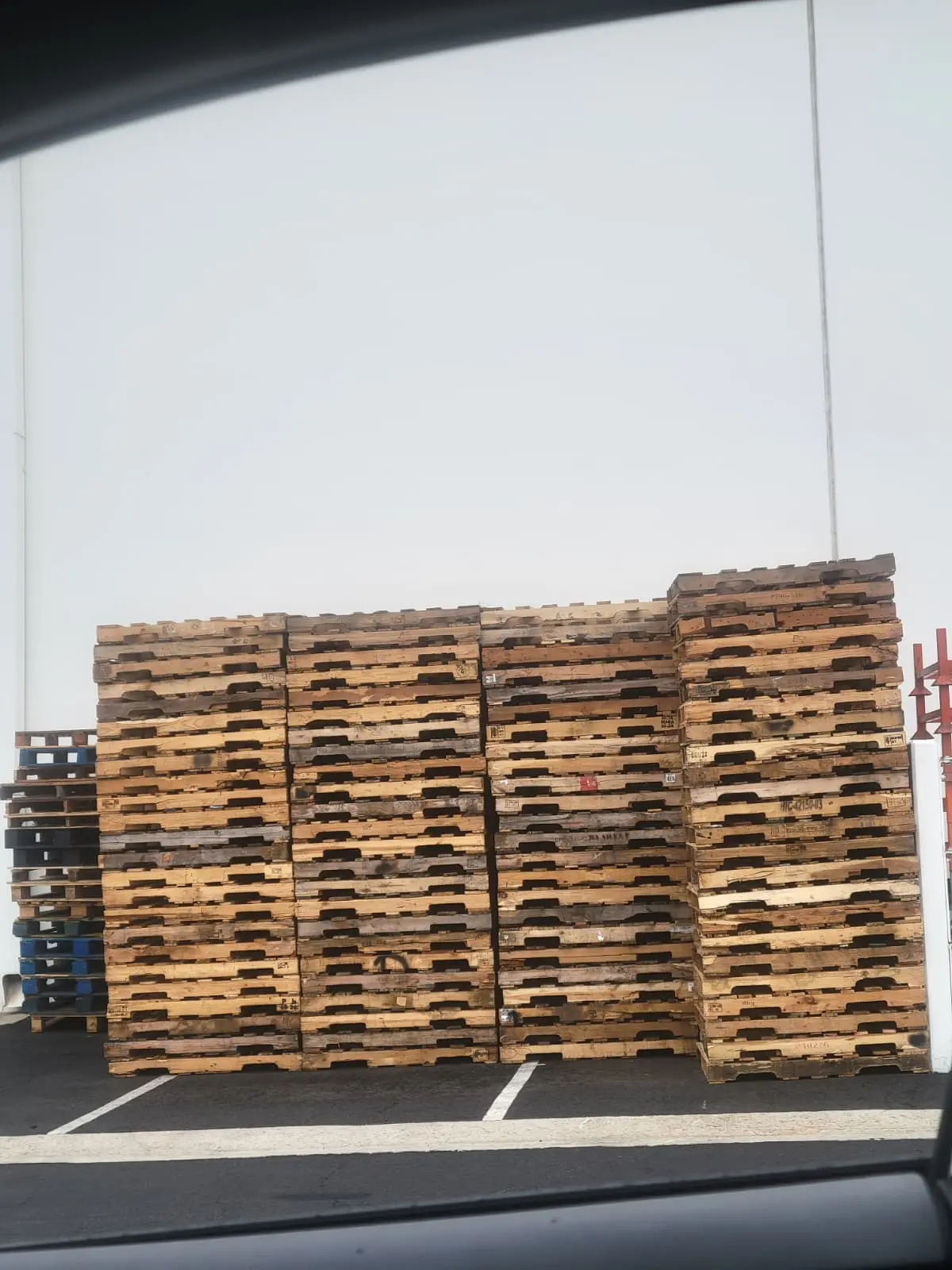
Accepted
- Standard 48×40 GMA pallets — the workhorse of North American freight, in any grade from A to broken.
- Non-standard wood pallets — 42×42, 48×48, custom sizes, oversized platforms. Slower to resell but absorbed through recycling.
- Heat-treated (ISPM-15) stamped pallets — whether the stamp is fresh or weathered, HT stock has resale value when intact and recycling value when broken.
- Block pallets — four-way entry pallets with block construction. Tend to have higher per-unit value when in resalable condition.
- Broken pallets — missing boards, cracked stringers, split blocks, mismatched repairs. All accepted as long as the load is dry.
- Mixed loads — whatever combination is sitting in your yard. We sort on-site rather than asking you to do it.
Not Accepted
- Wet or water-damaged pallets — saturated lumber can’t be recycled or refurbished. Mold contamination disqualifies the load.
- Chemically contaminated stock — pallets that have held pesticides, solvents, paint, or industrial chemicals. These require hazardous waste handling, which we don’t do.
- Mixed plastic and wood loads — plastic pallets aren’t part of our current program, and mixed loads can’t be processed through our wood recycling stream.
- Pallets with attached freight — if product is still strapped or shrink-wrapped to the pallet, it needs to come off before pickup.
If you’re unsure where your load falls, send photos with your quote request. The call we make at quote stage on accepted vs. not accepted holds at pickup — we don’t reject on arrival after green-lighting the load remotely. For more detail on what separates resalable stock from recyclable stock, our pallet inspection checklist walks through the same criteria our sorters use in the field.
Scheduling Windows by Zone
Turnaround depends on where you are in the basin. We run dedicated route days through the densest pallet corridors, so a pickup in those zones often gets faster service than zones we cover on demand.
Typical scheduling windows from the time we confirm:
- Vernon, Commerce, Downtown LA, Boyle Heights — 24 hours standard, same-day common. These zones see daily routes.
- Long Beach, Wilmington, Carson, South Bay — 24 to 48 hours standard. Port-adjacent volume keeps trucks circulating.
- San Fernando Valley — 48 hours typical. Route days are less frequent than the Vernon corridor but reliable.
- Orange County (Anaheim, Santa Ana, Fullerton, Irvine) — 48 to 72 hours. Larger loads can usually pull a dedicated trip same-week.
- Inland Empire (Ontario, Riverside, San Bernardino, Fontana) — 48 to 72 hours, sometimes faster on full-truck loads. Logistics corridor density helps.
Same-day pickup is on the table almost anywhere if the load is large enough to justify a dedicated trip and the timing works against the day’s route. The breweries we work with in Vernon and the warehouses we serve in Commerce sometimes call before lunch and have a truck on-site by close of business. Outer zones rarely move that fast on standard volume, but a 200+ pallet load can pull a same-day truck almost anywhere we cover.
Pickup vs. Buyback vs. Disposal: Picking the Right Modality
The three modalities aren’t alternatives you choose between — they’re what the load qualifies for based on volume and condition. But understanding which one applies to your situation up front saves time on the call.
Free pickup fits situations where volume is high enough to justify a free haul but the stock is mostly broken or low-grade. Construction site cleanups, retailer accumulations of weathered pallets, warehouse purges of broken inventory — all typical free-pickup territory. You get the space back, no money changes hands either direction.
Buyback fits operations with resalable stock — intact 48×40 GMA pallets, HT-stamped export pallets, block pallets in solid condition. The buyback program pays per pallet for the sortable portion of the load and absorbs the broken stock at no additional cost. If you’re a warehouse cycling through hundreds of pallets a week and a meaningful chunk is reusable, buyback is the right call. Our guide to selling pallets in LA covers the grading and pricing side in depth.
Disposal covers the gap — loads too small for free pickup, loads with conditions that fall outside the accepted list, or one-off situations from operations that don’t generate pallets regularly. A flat fee covers the truck and crew, no buyback involved. Still tends to run cheaper than commercial waste hauling for the same volume, and you avoid the contamination of dumping clean wood into a mixed-waste stream.
For high-volume operations cycling through resalable stock, recurring buyback agreements stack pickups and pricing into a single arrangement. The relationship side of that is detailed in our selling pallets guide. For broken-stock-heavy operations, the same recurring structure works as a standing free-pickup — the volume justifies the route, and the lumber flows into the recycling program for refurbishment and resale.
Documentation and Compliance Notes
Most pickups don’t require paperwork beyond a basic load count, but some operations have compliance profiles that need more. If your facility tracks waste streams for ISO, sustainability reporting, or contract compliance, ask for a Bill of Lading at pickup — we’ll provide one that documents pallet count, pickup date, and the disposition (resale, recycling, or disposal). It’s the kind of record that satisfies most waste audit requirements without creating extra friction for your operations team.
Brewery and food-grade facilities sometimes need additional documentation on HT-stamped pallet handling for export-related compliance. Our brewery pallet operations guide covers the HT and food-safety considerations specific to that sector. For other regulated industries — pharma, cosmetics, anything FDA-touched — flag the compliance need at quote stage and we’ll align the documentation to what your auditors expect.
For most warehouses and retailers, no paperwork beyond a count and a signature is needed. The truck rolls, the dock clears, and the cycle repeats next week.
Frequently Asked Questions
How quickly can you pick up pallets in Los Angeles?
Standard turnaround is 24 to 48 hours from quote confirmation. Same-day pickup is often available in Vernon, Commerce, Downtown LA, and Long Beach when volume justifies a dedicated trip. Inland Empire and Orange County typically schedule within 48 to 72 hours.
Is pallet pickup really free?
Free pickup applies above roughly 50 pallets in mixed condition, or 30+ pallets in resalable condition (which also qualify for buyback payment). Smaller loads carry a modest disposal fee. Recurring weekly accounts get free service at lower per-pickup volumes.
What kinds of pallets do you accept?
All standard and non-standard wood pallets, including 48×40 GMA, block pallets, ISPM-15 heat-treated stock, and broken or weathered pallets. We do not accept wet, mold-contaminated, chemically contaminated, or mixed plastic-and-wood loads.
Can I get documentation for compliance reporting?
Yes. Bills of Lading documenting pallet count, pickup date, and disposition (resale, recycling, or disposal) are available on request and standard for accounts with waste audit, ISO, or sustainability reporting requirements.
Need Pallets Picked Up This Week?
Tell us how many you have and where they are. Most LA-area pickups roll within 24 to 48 hours, often same-day for urgent loads.
☎ (213) 703-5326 English
☎ (323) 674-6876 Español
REQUEST A FREE QUOTERelated Articles
How to Sell Pallets for Cash in LA
Buyback program, grading, and recurring agreements for resalable pallet stock.
Pallet Recycling in Los Angeles
What happens to broken pallets after pickup and why it saves money.
Pallet Inspection Checklist
The criteria sorters use to separate resalable stock from recyclable lumber.