Choosing Pallets
Custom vs Standard Pallets: When Your Load Actually Needs Custom
By Bro Pallets LLC Team | Published June 30, 2026
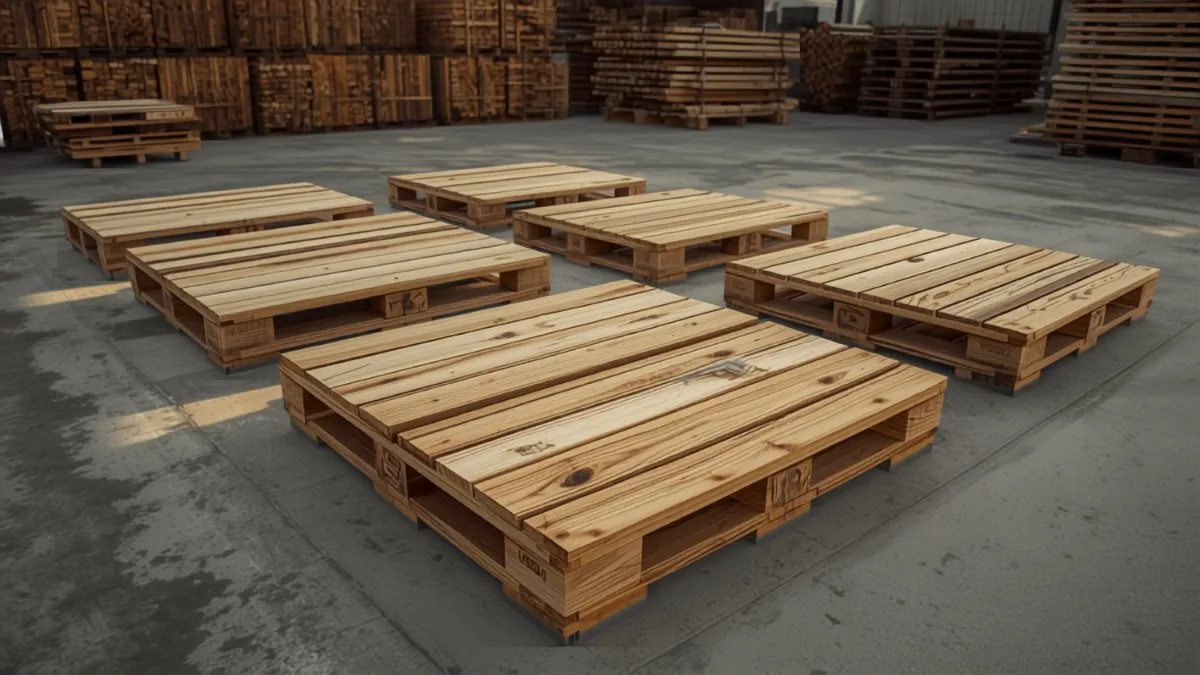
Most freight does not need a custom pallet, and a good supplier will tell you so. The standard 48x40 exists precisely because it handles the bulk of what businesses ship, and ordering a custom build for a load that fits a standard footprint is paying for engineering you do not need. The skill is knowing the line, the point where a standard pallet stops doing the job and a custom one starts saving you money instead of costing it.
That line is what this article is about. Rather than push one option, it walks through the three things that actually decide it, the dimensions of your load, its weight, and its handling requirements, so you can look at what you are shipping and know which way to go before you ask for a quote.
When a Standard Pallet Is the Right Call
For the majority of palletized freight, a standard 48x40 block pallet is not a compromise, it is the correct tool. If your product sits within a 48 by 40 inch footprint, weighs under roughly 2,500 lbs in motion, and does not have unusual handling needs, the standard pallet wins on every count that matters. It is cheaper because it is produced at scale, it is available immediately rather than on a build schedule, and it drops into the racking, trailers, and retailer requirements that the whole supply chain is built around.
There is a real cost to over-specifying here. A custom pallet for a standard load ties up budget, adds lead time, and gives you a platform the rest of the chain is not optimized for. If you are simply unsure which standard size fits, that is a sizing question rather than a custom one, and our guide on standard pallet dimensions covers the common footprints. The honest default is standard until something about the load forces the issue.
The Three Things That Force a Custom Pallet

Three load characteristics override the standard default. When one of them shows up, a standard pallet is not a cheaper option, it is the wrong one, and forcing a load onto it risks the cargo and everyone near it.
The Load Does Not Fit the Footprint
The clearest trigger is dimension. If your product overhangs a 48x40 deck, the unsupported edges are where damage and tipping start, and overhang also voids the load rating the pallet was given. Machinery, HVAC units, solar panels, construction materials, and long or wide items routinely run past a standard footprint and need a platform built to their actual size. At the other end, very small or display-ready items can call for a compact specialty pallet down to 12 by 12 inches. Either way the fix is a deck sized to the load, which is what oversized pallets are for.
The Load Is Heavier Than Standard Stock Is Rated For
Weight is the second trigger and the most dangerous to ignore. A standard 48x40 pallet carries roughly 2,500 lbs dynamic and up to about 4,600 lbs static depending on grade. Cast iron, concrete, steel coils, stone slabs, and dense machinery blow past that. A reinforced custom pallet uses thicker deck boards, extra stringers or blocks, and often hardwood lumber to lift the rating to where the load needs it. The extra wood is not waste, it is the capacity, and it is the difference between a platform that holds and one that fails in transit.
The Load Has Special Handling Needs
The third trigger is everything that is not size or weight. A flush or reversible deck for automated lines, a smooth continuous top for fragile goods, precise dimensional support for aerospace and defense parts, or a base built to a film and entertainment rig, these are handling requirements a generic pallet cannot meet. When the way a load is moved, machined, or protected is itself a spec, the pallet has to be built to it. For fully enclosed protection that goes beyond a deck, the same logic points toward custom wooden crates.
What Custom Actually Costs You in Time
Custom does not mean slow, but it does mean planned. Simple custom dimensions typically run 3 to 5 business days at our LA yard, while larger, reinforced, or heat-treated builds run 7 to 10, with rush requests often accommodated. There is no strict minimum order, so even a single prototype is fine. The practical takeaway is to decide early: if your load trips one of the three triggers above, factor the build window into your shipping date rather than discovering the need the day the freight has to move.
Not Sure Which Side of the Line You Are On?
If you can look at your load and see that it fits a 48x40, weighs under the standard rating, and ships normally, order standard and move on. If any one of dimension, weight, or handling pushes past what standard stock is built for, that is the signal to spec a custom build. When it is genuinely unclear, the fastest way to settle it is to describe the load to us. We build custom pallets to exact specifications across Los Angeles, and we will tell you honestly when a standard pallet would serve you better, because selling you a custom build you do not need is not how the pallet business keeps customers. You can see the range and start a spec on our custom pallets page, and for the transactional details there is our note on ordering custom pallets near you.
Standard or Custom? Tell Us the Load
Describe the size, weight, and handling, and we will tell you which pallet fits, with a fast and honest quote and no obligation, in English or Spanish.
☎ (213) 703-5326 English
☎ (323) 674-6876 Español
REQUEST A FREE QUOTE